
Successful transition of young people to the labour market is one of the key objectives of post-secondary education. Given the importance, governmental (European and national) policies and programmes aim to enhance youth employability (Vossensteyn, et al., 2018). What is less clear is how countries are trying to do so.
Governments have different policy instruments at their disposal. In public administration, these instruments are famously grouped in carrots, sticks, or sermons. The carrot is a reward for good behaviour, while the stick is a negative consequence of poor behaviour. The sermon is trying to promote the desired behaviour through communication.
What these policy instruments have in common is that they try to steer the behaviour of individuals, in a benevolent or less benevolent way.
Of course, there is a more specific distinction in policy instruments, which unfortunately doesn’t speak that much to our imagination, but is in fact not too different from carrots and sticks.
Hood and Margetts (2007) distinguish four policy instruments:
- Financial: instruments to compensate, reward or punish behaviour of individuals or organisations.
- Regulation: Laws or regulations that forbid or command behaviour of individuals or organisations.
- Organisation: policies that create or determine structures or actors, which indirectly may collect or disseminate information.
- Information: policies that aim to facilitate communication or supply information to stakeholders.
Like the carrot, financial instruments are used to nudge actors towards certain behaviours. However, it is not only used as a reward (e.g., a subsidy). It can also be used as a punishment (e.g., a fine). Consequently, sticks are not only linked to regulations (e.g., laws) that forbid or command behaviour of individuals or organisations. Sermons are either delivered directly by supplying information to stakeholders or indirectly by special created structures to collect and disseminate information.
We have used the four instruments to analyse the youth employability policies that were introduced. We did so as part of the NEXT-UP project’s Work Package 5, which is tasked with researching the policy side of the youth transitions. In the first task of this work package, we developed a typology categorising various youth employability policies by creating an overview of policies implemented during the COVID-19 pandemic. We included EU 28 and EFTA countries at the national level, with a focus on policies implemented between 2019 and 2022.
A total of 672 policies were observed, including both active labour market policies and educational policies. Overall, the most frequently used instrument to steer behaviour for youth employability is financial (Figure 1). In fact, only 26% of the found policies are not related to a financial incentive, with information policies coming second, respectively followed by organisational policies and regulatory instruments.
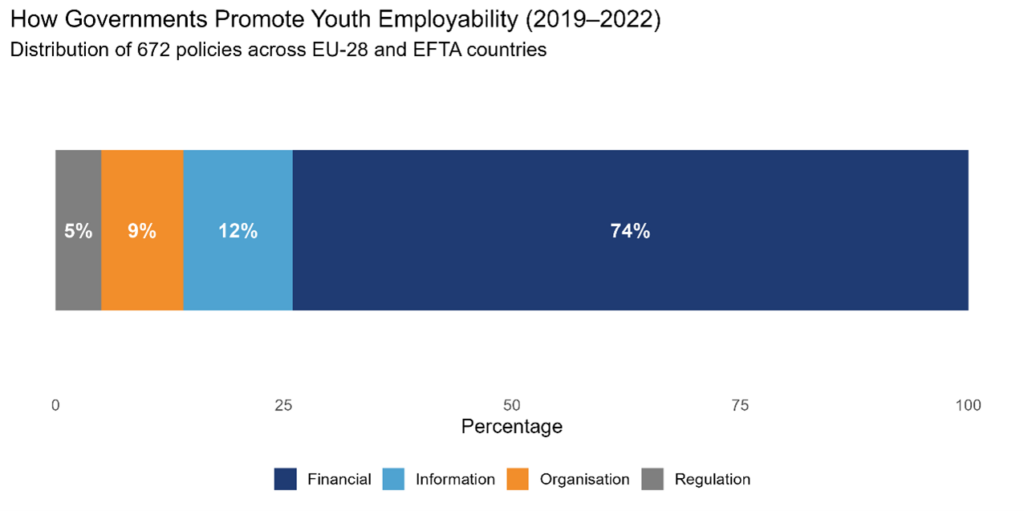
Figure 1: Policy instruments used to address youth employability across the EU
With this overall picture, we can also observe deviations from the general pattern (Figure 2). Countries with a very strong focus on financial instruments to influence youth employability include Romania, Sweden, Italy, France, Malta, Poland, Germany, Bulgaria, Greece, and Spain. On the other side, countries that more than others aim to persuade individuals to improve their employability through information are: Denmark, Estonia, Latvia, Cyprus, Finland, Ireland, Austria, Netherlands, and Slovakia. Organisational instruments are more commonly used in Slovenia, Luxembourg, Czechia, Lithuania, Hungary, Finland, and Poland. The least popular policy instrument is regulation, but is comparatively more often used in Norway and Slovakia.
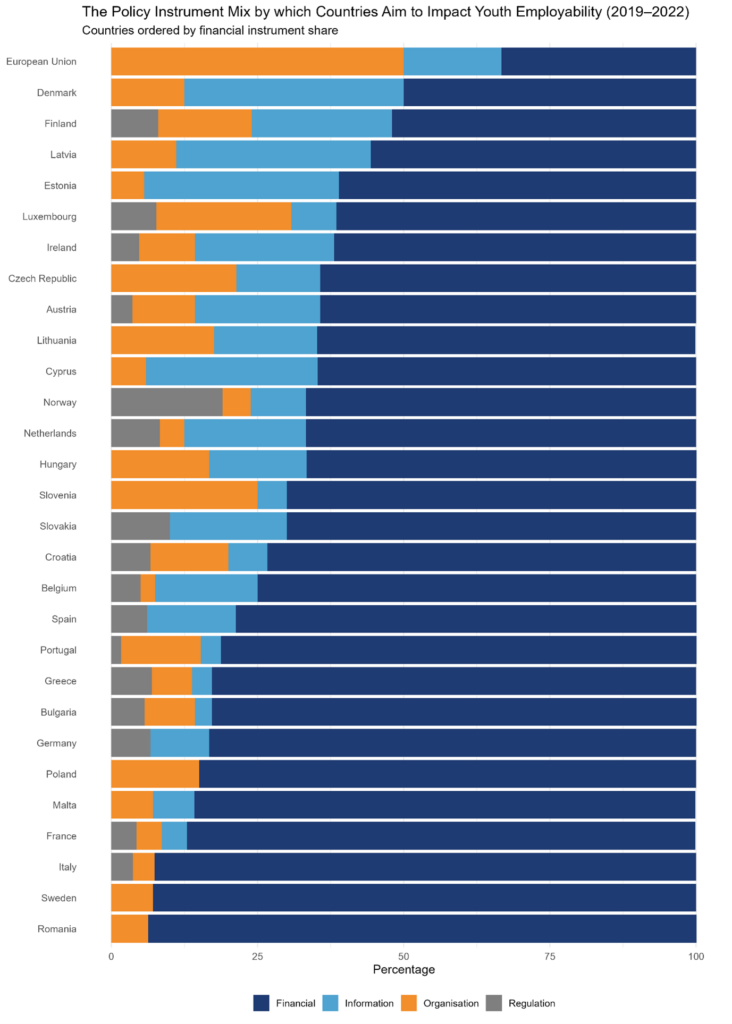
Figure 2: Policy instruments used to address youth employability by country
This overview shows that governments adjust their policy instruments to local contexts. They pick the instruments they deem most effective, while also considering the political and public acceptance of the introduced policies, which is very likely based on path dependencies.
Yet, creating overviews of differences and similarities also opens the door to reflection: perhaps more can be gained by a more balanced policy mix, particularly in countries with a strong focus on financial instruments. Have the implemented policies been effective in overcoming the negative effects of COVID-19 on youth employment? Also, more broadly, which types of policies are effective in times of crisis?
The provided information showcases that there are many roads to youth employability, and there certainly is not just one instrument to get there. Carrots, sticks, or sermons are all used to move the cart forward, i.e. to influence behaviour, either by encouraging the desired actions, by punishing undesired actions, or through persuasion.
Within Work Package 5, we aim to provide policy makers with key insights to make well-informed choices to improve youth employability. In the first task we did so through our extensive overview of implemented policies. In the next task we will study the effectiveness of policies through a systematic literature review. In the final task, we will bring all the outcomes together and develop actionable and evidence informed policy recommendations for policy makers.
References:
Hood, C.C., & Margetts, H.Z. (2007). The tools of government in the digital age. Macmillan International Higher Education.
Vossensteyn, H., Kolster, R., Kaiser, F., File, J., Huisman, J., Seeber, M., Muehleck, K., Vukasovic, M., & Gwosc, C. (2018). Promoting the Relevance of Higher Education. Main Report. European Commission.