
Porto was a perfect place for discussing the progress of the NEXT-UP project and planning the next steps for the future. The beautiful city itself would already have been reason enough to visit. Stretching along the steep riverbanks of the Douro, Porto offers narrow alleys, winding streets and remarkable views at every turn. But it was not the only reason to come to Porto…

After more than 15 months into the project, it was a good moment for the NEXT-UP consortium to take stock and look ahead.
The NEXT-UP Consortium meeting brought partners together to discuss emerging findings, methodological challenges and innovative approaches to supporting young people’s education-to-employment transitions in post-COVID Europe.
Our colleagues from the University of Aveiro and the Centre for Research in Higher Education provided a beautiful venue at Casa Comum, University of Porto. The setting felt particularly fitting for a European collaborative project: a “common house” where people come together, share ideas and create room for different kinds of encounters. The only downside was that we had to leave on time, as musicians were arriving in the evening to fill the room in another way.
Before that, however, we had a full programme. We shared first results and emerging insights, explored connections across work packages and discussed the next steps for the project. While it is natural in a large project to report on and reflect on the work carried out in different work packages, the NEXT-UP Consortium meeting went beyond this. Building on the employability ecosystem ideas introduced by Yuzhuo Cai, we discussed a shared conceptual framework for the project and explored potential synergies across Work packages. These conversations helped strengthen our collective understanding of NEXT-UP, its overall direction and the tasks ahead.
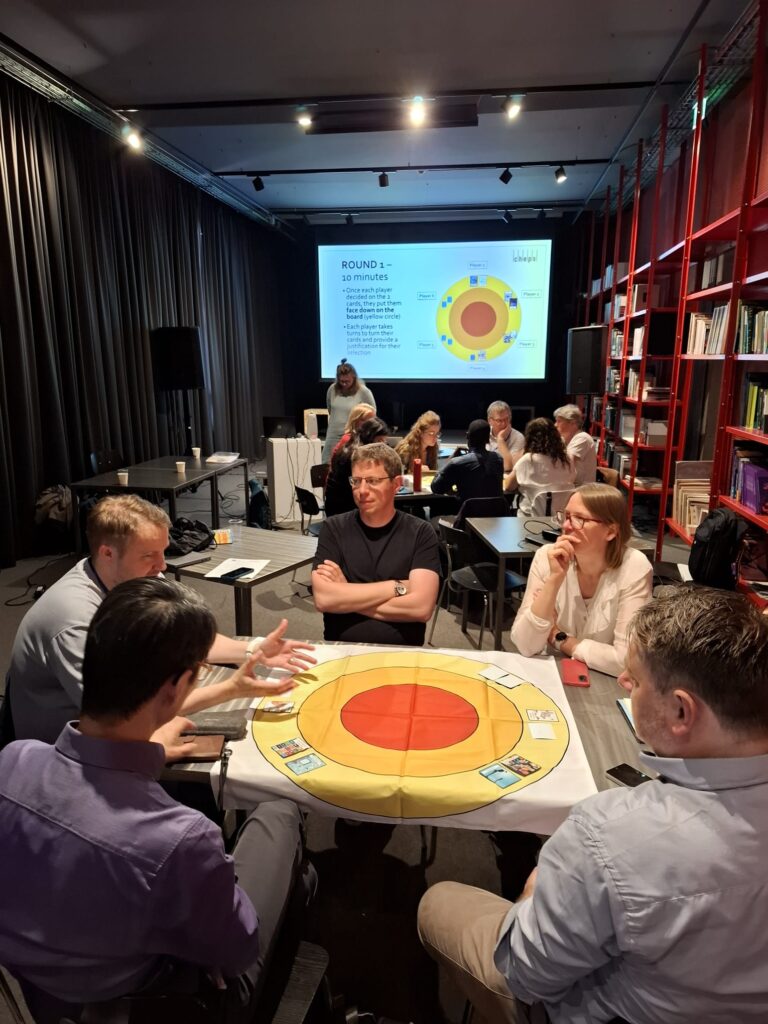
In addition, we tested the Skills Game for employability, designed by Daniela Craciun, which helped bring together ideas from different NEXT-UP partners. The game was both enjoyable and thought-provoking. One interesting insight was that our own expectations about future-oriented skills did not always fully align with the skills currently emphasised by employers in job ads. As one participant noted, the game was a “simple but very effective way to start a conversation. Values and goals seemed to meet in most unexpected places”. Overall, the activity showed strong potential as a Living Lab tool for supporting dialogue between researchers, educators, employers, policymakers and young people on education-to-work transitions.
But more on this will come up soon as a Next-UP report.